
When facing brain surgery, understanding your treatment options can significantly impact your recovery and long-term outcomes. Minimally invasive brain surgery has revolutionized neurosurgical care in recent years, offering patients faster recovery times and reduced complications compared to traditional open procedures. At Dr. Shyam’s Brain and Spine Center in Madurai, advanced endoscopic techniques and pioneering achievements in cerebrovascular surgery are helping patients achieve better outcomes with less trauma to surrounding tissues.
Understanding the Two Surgical Approaches
Traditional brain surgery, known as craniotomy, involves creating a larger opening in the skull to access the affected area. This conventional approach has been the gold standard for decades and remains essential for certain complex conditions. However, minimally invasive neurosurgery utilizes specialized instruments, endoscopes, and advanced imaging to access brain lesions through much smaller incisions—often just a few millimeters in size.
Traditional Craniotomy Characteristics
Craniotomy procedures require removing a larger section of skull bone to expose the surgical area, which provides surgeons with direct, wide-field visualization. This approach is typically necessary for large tumors, extensive vascular malformations, or cases requiring access to multiple brain regions simultaneously. The larger incisions allow for traditional surgical instruments and manual manipulation, giving surgeons comprehensive control in complex scenarios.
Minimally Invasive Endoscopic Approach
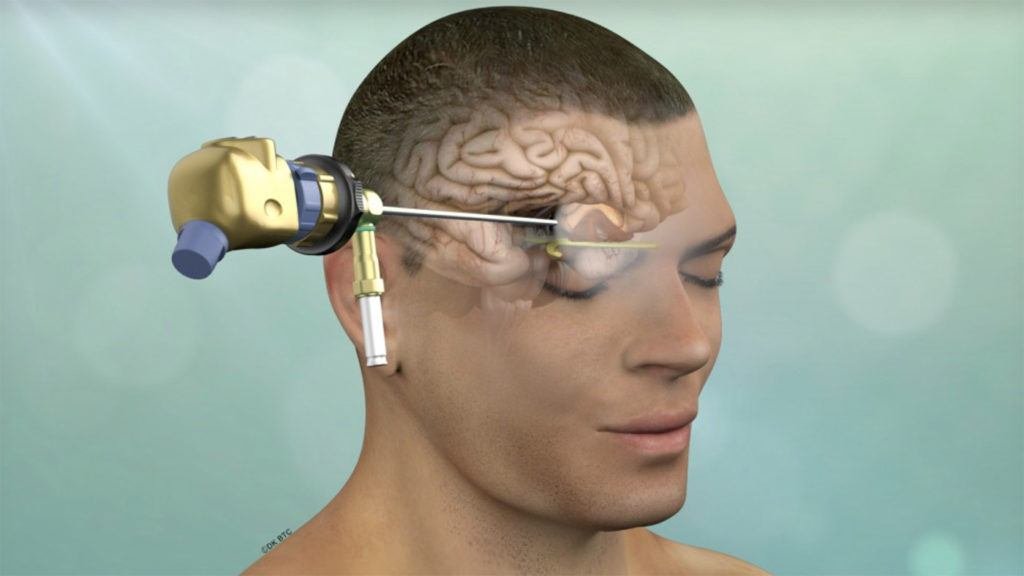
Endoscopic neurosurgery employs high-definition cameras and specialized instruments inserted through small openings, natural anatomical pathways, or even through the nostrils in endonasal procedures. This technique allows surgeons to navigate to deep-seated lesions while minimizing disruption to healthy brain tissue. Dr. Shyam’s expertise in advanced endoscopic techniques enables precise tumor removal and vascular repairs that previously required much larger surgical exposures.
Proven Benefits of Minimally Invasive Brain Surgery
Research demonstrates that minimally invasive techniques offer substantial advantages for appropriately selected patients. A comprehensive study comparing endoscopic surgery to craniotomy found significantly shorter operation times, reduced blood loss, higher hematoma evacuation rates, fewer complications, and lower mortality rates with endoscopic approaches.
Faster Recovery and Shorter Hospital Stays
Patients undergoing minimally invasive brain surgery typically experience hospital discharges within 1-2 days post-surgery, compared to weeks with traditional approaches. The reduced tissue trauma allows patients to return to normal activities much sooner—a critical advantage for working professionals and elderly patients who want to maintain their independence. This accelerated recovery timeline translates to lower healthcare costs and less disruption to daily life.
Reduced Surgical Risks
Smaller incisions significantly lower the risk of wound infections, cerebrospinal fluid leaks, and postoperative neurological complications. Endoscopic procedures use internal lighting that maintains consistent brightness regardless of depth, providing clearer visualization than external lighting used in craniotomies. This superior illumination helps surgeons avoid damage to important brain functional areas and blood vessels, resulting in safer outcomes.
Less Pain and Minimal Scarring
The smaller incisions characteristic of minimally invasive surgery leave less conspicuous scars and cause significantly less postoperative discomfort. Patients typically require fewer narcotic pain medications and experience less tissue manipulation, leading to reduced inflammation and faster healing.
Dr. Shyam’s Pioneering Achievement: India’s First High-Flow Endoscopic Bypass
Dr. Shyam D brought international recognition to Madurai by successfully performing India’s first high-flow bypass surgery using advanced endoscopic techniques. High-flow extracranial-intracranial (EC-IC) bypass procedures represent one of the most complex cerebrovascular surgeries, requiring exceptional surgical skill and specialized training.
This groundbreaking achievement involves rerouting blood flow to bypass blocked or damaged blood vessels in the brain, preventing stroke in patients with critical vascular conditions. The procedure utilizes radial artery or saphenous vein grafts to create new pathways for blood flow, demanding precise microsurgical technique and comprehensive understanding of cerebrovascular anatomy. Dr. Shyam’s specialized training in cerebrovascular surgery in Japan, combined with his fellowship credentials (IFAANS, FACS), positioned him to bring this life-saving technique to patients in Tamil Nadu who previously had to travel abroad for such advanced care.
When Traditional Surgery Remains the Best Option
While minimally invasive approaches offer numerous advantages, traditional craniotomy remains essential for specific conditions. Extensive brain tumors involving multiple lobes, certain trauma cases requiring wide exposure, and some vascular malformations with complex anatomy may necessitate open surgical approaches.
Clinical Scenarios Favoring Craniotomy
Large meningiomas involving the skull base, glioblastomas requiring extensive resection margins, and trauma patients with multiple injury sites often benefit from traditional approaches. Additionally, patients with significant brain swelling or those requiring simultaneous access to both hemispheres may need larger cranial openings for optimal surgical management.
How Dr. Shyam Determines Your Ideal Surgical Approach
At Dr. Shyam’s Brain and Spine Center, treatment planning begins with comprehensive imaging studies including high-resolution MRI and CT scans. Dr. Shyam evaluates tumor location, size, proximity to critical structures, and overall patient health to recommend the most appropriate technique. His mastery of both traditional and minimally invasive methods ensures you receive truly personalized care based on your specific condition—not limited by surgical capabilities.
Factors Influencing Surgical Selection
Lesion depth and accessibility through natural anatomical corridors favor endoscopic approaches, while lesions requiring wide exposure or those with unclear margins may benefit from traditional surgery. Patient factors including age, medical comorbidities, and recovery goals also influence the surgical decision, as minimally invasive options particularly benefit elderly patients and those with demanding work schedules.
Recovery Expectations: What Patients Experience
Minimally invasive brain surgery patients at Apollo Hospitals Madurai typically mobilize within hours of surgery and transition to oral pain medications quickly. Most patients experience minimal fatigue compared to traditional surgery, with many returning to desk work within 2-3 weeks. Traditional craniotomy patients generally require 4-6 weeks before resuming normal activities, with more intensive rehabilitation protocols.
Long-Term Outcomes
Studies demonstrate that appropriately selected patients undergoing minimally invasive procedures achieve equivalent or superior long-term outcomes compared to traditional surgery, with the added benefits of better cosmetic results and fewer chronic complications. Dr. Shyam’s patient follow-up protocols ensure optimal healing and early detection of any concerns requiring intervention.
Why Choose a Minimally Invasive Neurosurgeon in Madurai
Dr. Shyam’s international fellowship training in cerebrovascular surgery, skull base surgery, and functional neurosurgery equips him with advanced skills rarely available outside major metropolitan centers. His achievement as the first surgeon in India to perform high-flow endoscopic bypass demonstrates a commitment to bringing cutting-edge techniques to patients in Madurai and throughout Tamil Nadu.
Choosing a minimally invasive neurosurgeon in Madurai with Dr. Shyam’s credentials means accessing world-class neurosurgical care without the need to travel to Chennai, Mumbai, or abroad. The combination of Apollo Hospitals’ state-of-the-art infrastructure and Dr. Shyam’s specialized expertise provides optimal conditions for successful minimally invasive brain surgery outcomes.
Schedule Your Consultation
If you or a loved one requires a neurosurgical evaluation, contact Dr. Shyam’s Brain and Spine Center at Apollo Hospitals, Madurai, for a comprehensive assessment. During your consultation, Dr. Shyam will review your imaging studies, discuss all surgical options including minimally invasive techniques, and develop a personalized treatment plan designed to achieve the best possible outcome with minimal disruption to your life.
